
Loading table of contents...
How to Choose a Vietnamese Rice Exporter: A Buyer's Guide
Table of contents
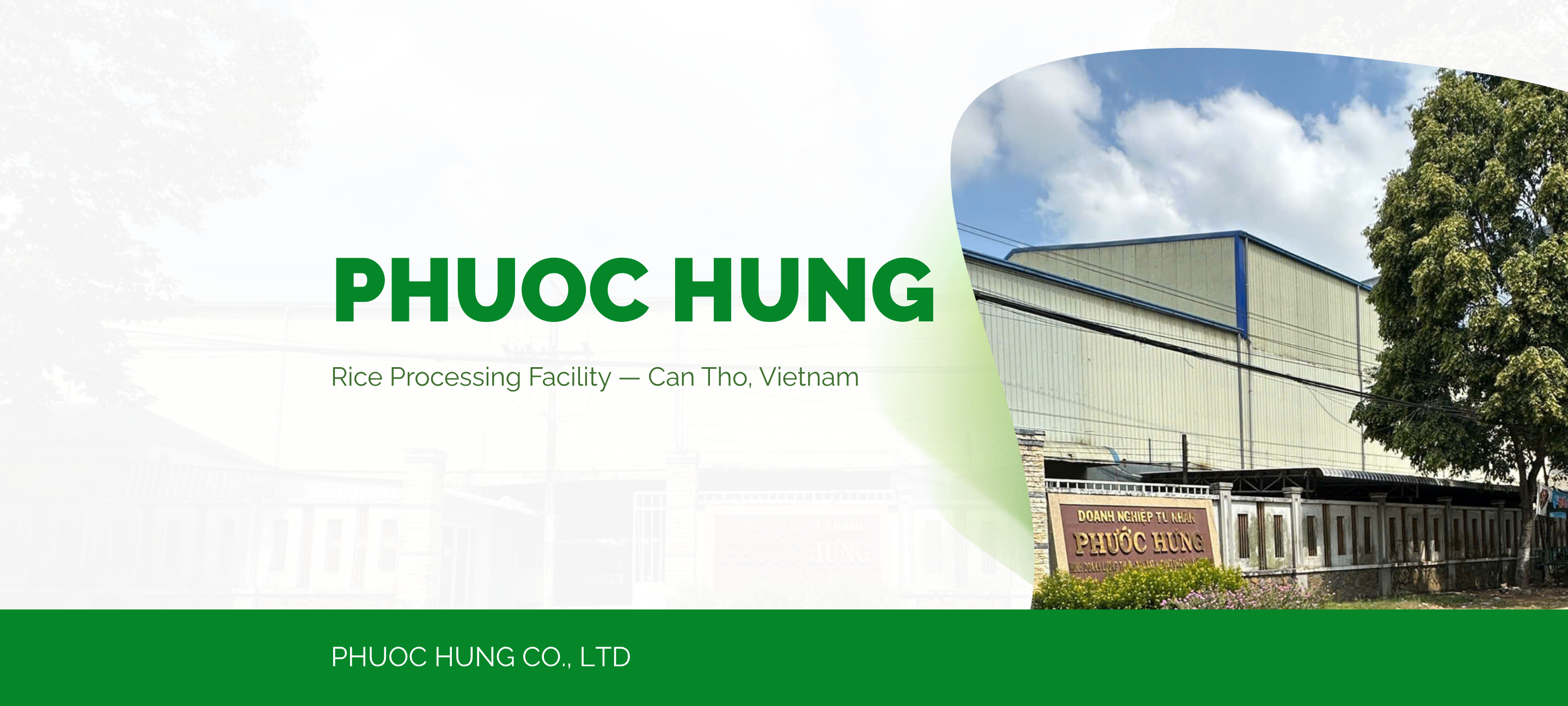
Phuoc Hung rice processing facility — Can Tho, Vietnam
Vietnam is one of the world's largest rice exporters, and the Mekong Delta alone is home to hundreds of processors, millers, and trading companies. For a buyer approaching the market for the first time, or reconsidering an existing supplier relationship, the choice can feel overwhelming.
This guide is written from the perspective of a processor based in Can Tho. We have an obvious interest in your business. But the questions below are ones we believe every buyer should ask every potential supplier, including us. A supplier that cannot answer them clearly is telling you something important.
Processor or trader?
This is the first question to ask and the most consequential. A processor owns and operates the milling, drying, and packing facility. A trader buys finished or semi-finished rice from processors and sells it to export buyers.
Working directly with a processor typically means more pricing transparency, more direct accountability for quality, and the ability to customise specifications at the source. Traders can offer a broader product range, but they are one step removed from the production itself.
The practical test is straightforward. Ask to see photos or video of the processing facility. Ask for the factory address and whether you can arrange a third-party inspection before shipment. A processor will say yes immediately. A trader will hesitate or redirect the conversation.
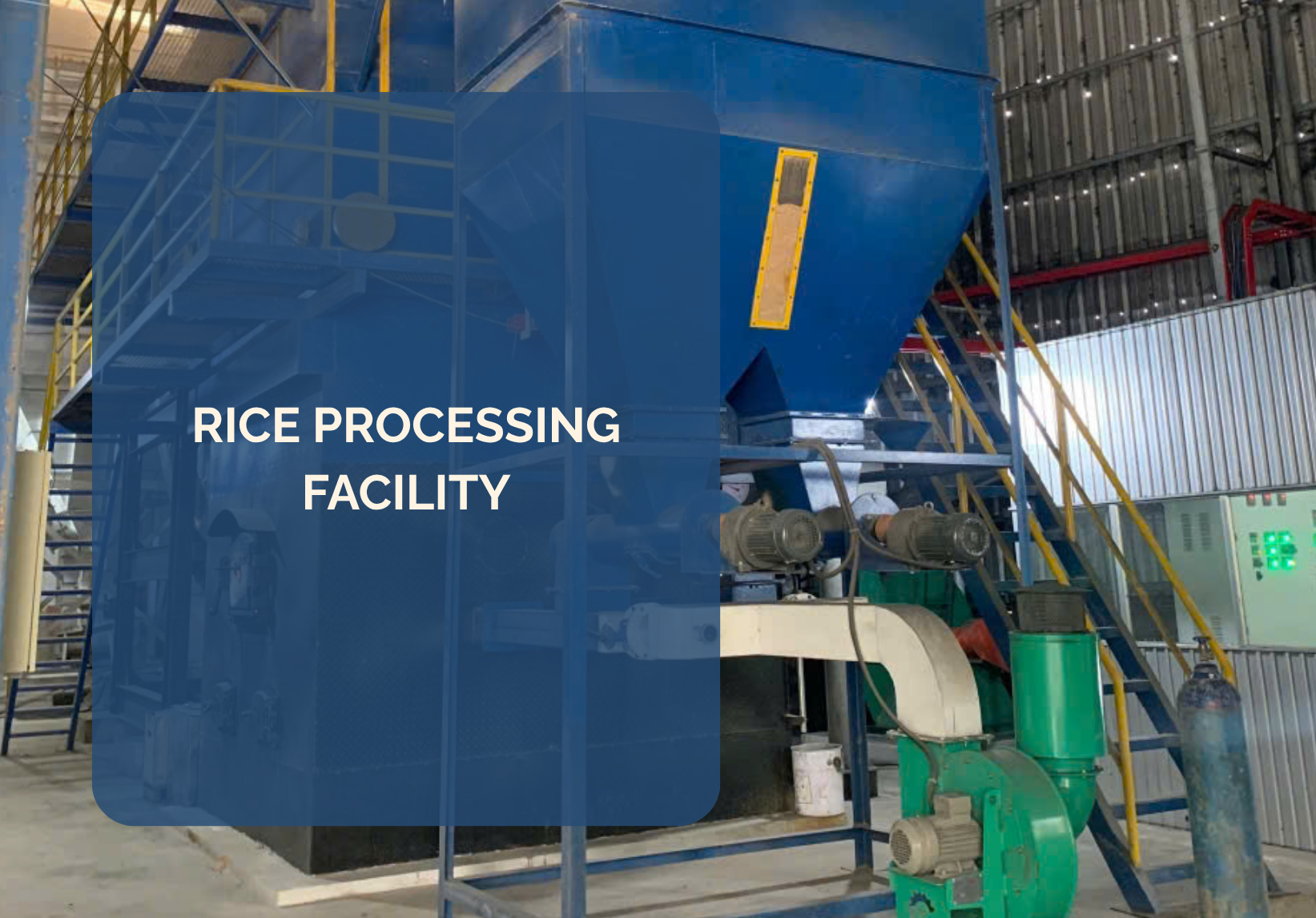 Rice processor vs trader — Phuoc Hung owns its full processing facility
Processing capacity
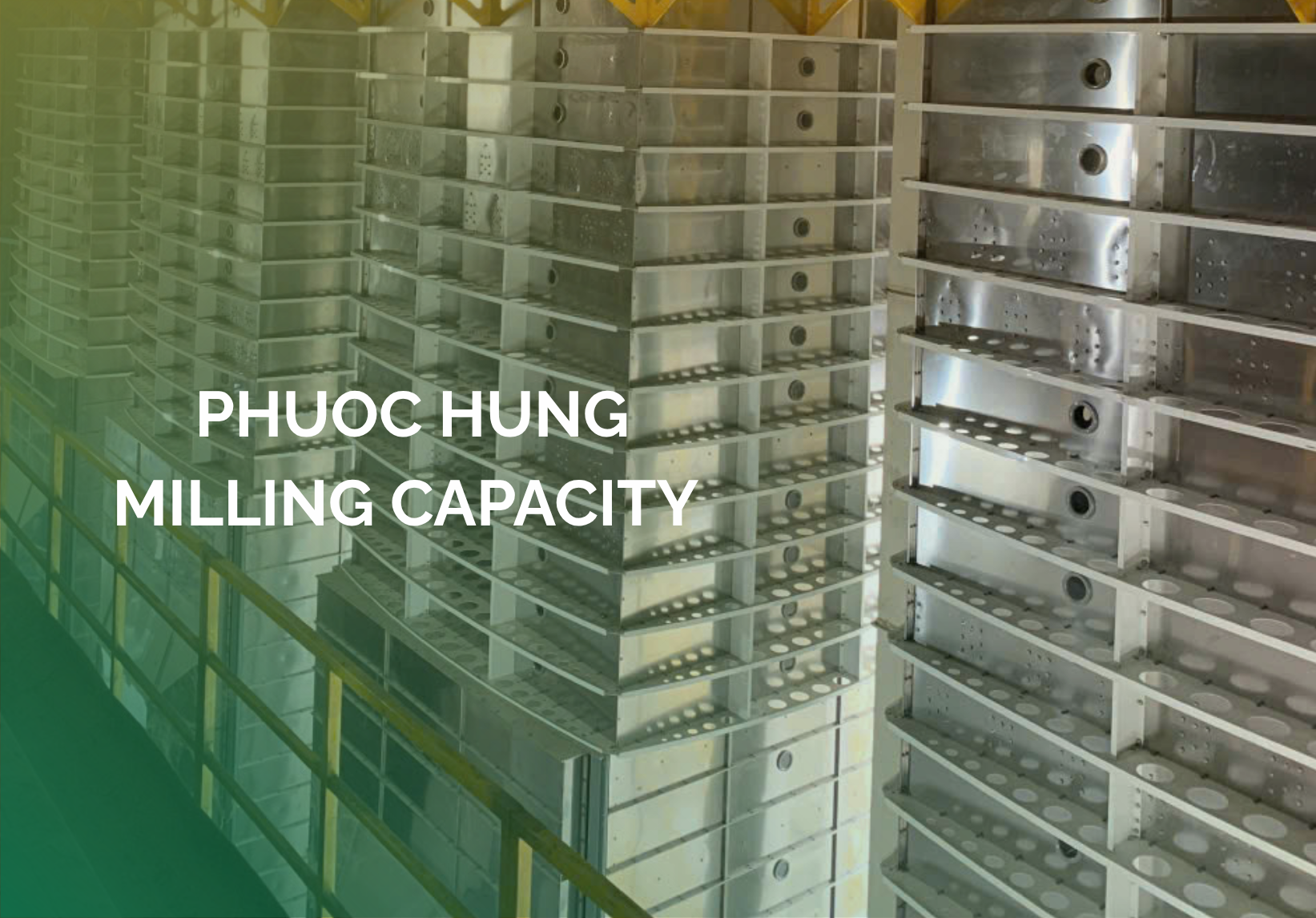 Phuoc Hung milling capacity — 700-800 tons per day
A supplier's capacity tells you whether they can fulfil your order without disrupting other commitments, and whether they can scale with you as your volumes grow. The key figures to ask for are milling capacity in tons per day, drying capacity, colour sorting capacity, and total finished rice storage.
A supplier with 700 to 800 tons of milling capacity per day and annual throughput of 180,000 to 250,000 tons can handle large contracts without operational strain. A smaller mill may struggle with time-sensitive orders, leading to rushed production and inconsistent quality.
Where does the paddy come from?
Rice quality begins with the paddy before it ever reaches the mill. A supplier that sources from farming cooperatives across multiple Mekong Delta provinces has a meaningfully different risk profile from one dependent on a single region or a single intermediary trader.
A diversified supply network provides real protection against localised weather events, flood seasons, or harvest shortfalls. A supplier concentrated in one area carries supply risk that will eventually affect your orders.
Can they supply to your exact specification?
International rice contracts run on specifications. Your purchase order will typically name a moisture content maximum, a broken grain tolerance, a milling degree, and a grade. The supplier's ability to consistently meet those specifications depends on their equipment and their process discipline.
A processor with modern colour sorting technology can sort to different broken grain tolerances and remove off-colour or undersized grains at scale. Ask specifically whether they can supply at 5% broken. Ask what their process is when a shipment tests outside the agreed specification. How they answer that second question tells you a great deal about how they operate.
What documentation do they provide?
Documentation is not paperwork for its own sake. For buyers in regulated markets like Europe, Australia, or the Middle East, the document set is how customs authorities validate the shipment and how your end customers verify the product. A complete set includes a bill of lading, phytosanitary certificate, certificate of origin, certificate of analysis, commercial invoice, and packing list.
Ask your potential supplier to show you a sample document set from a previous shipment. If they are slow to provide these, or the documents look inconsistent or incomplete, treat that as a meaningful warning sign.
Have they shipped to your market before?
Export experience is more valuable than it might seem. A supplier who has shipped to Australia understands the Australian Quarantine and Inspection Service requirements. One who regularly exports to the EU understands the phytosanitary certification process for European customs. First-time exporters to a new market frequently underestimate lead times, document requirements, or port inspection procedures.
Ask which countries they currently export to, roughly how many containers they load per month, and whether they have experience with the Incoterms you need. A supplier comfortable with CIF pricing has experience coordinating freight and marine insurance, which reduces your logistics burden considerably.
What does the first order look like?
The best suppliers make the first order straightforward. That means a clear quotation with all specifications written out, a willingness to send a sample before you commit to volume, a formal sales contract with payment terms stated plainly, and a named contact who will manage your order from enquiry to delivery.
If a supplier is vague about who will handle your account, or pressures you to commit to volume without offering a sample, that pattern rarely improves once a deposit has been paid.
|
Sourcing rice from Vietnam? Phuoc Hung Co., Ltd is a rice processor and exporter based in Can Tho, Vietnam, with nearly 30 years of experience supplying buyers in the Philippines, China, Africa, Europe, and Australia. Contact our export team: phuochungrice@gmail.com | +84 369 970 541 |
Post related
ST25 Rice: Why It Commands a Premium and What Importers Should Know
When buyers ask us about ST25 rice, the question is almost always the same: is the price difference actually worth it? The honest answer is yes, but only in the right market. ST25 is not the correct product for every buyer. Understanding what makes it special, who it is designed for, and what to verify before placing an order will help you make that call clearly.
Why the Same Rice Grade Can Perform Differently from Different Suppliers
You have been importing OM5451 for years. You know what it looks like, how it cooks, and what your customers expect. Then you switch to a new supplier, the grade on the contract is identical, the certificate of analysis is within spec, and yet something is noticeably different when the rice reaches your customers. It is not your imagination. The same grade designation can cover a wide range of actual product outcomes depending on where the paddy was sourced, how it was dried, how it was milled, and how carefully it was sorted. This article explains exactly what creates that variation and what to ask a supplier to understand where they sit on that spectrum.
Fragrant Rice or Standard White Rice: Which Is Right for Your Market?
When buyers approach us about Vietnamese rice for the first time, one of the most common questions we hear is a simple one: what is actually the difference between fragrant rice and standard white rice, and which one should I be buying? It is a fair question. Both categories are widely exported from Vietnam, both arrive in similar packaging, and from a distance they can look alike. But they serve different markets, carry different price points, and perform very differently in the kitchen. Buying the wrong type for your customer base is an easy mistake to make and a frustrating one to undo. This article explains the practical differences between the two categories so you can match the right product to your market.